Consult
During the consultation, we will discuss your wishes. I assess the shape of the ear and choose the most appropriate surgical technique. Photos are taken and my assistant, who is also present at the meeting, gives further information about the planning and logistics in the clinic.
Surgery
An ear correction can be done perfectly well under local anaesthesia. An addition to the local anaesthetic fluid reduces any discomfort from the needle punctures. (Conscious) sedation is an option. If both ears are operated on, the procedure takes an hour; if only one ear is operated on, it takes approximately 45 minutes.
After the anaesthesia has taken effect, an incision is made in the skin on the back of the ear at the level of the ear's edge. After loosening the skin, the skin fold is created in the cartilage; any excess cartilage is removed, including from the protruding ear lobe if necessary, to improve the shape of the ear. This will make the ear a little smaller. If the ear's conchal bowl is too deep, cartilage is removed, bringing the entire ear closer to the head. Removing any skin is unnecessary; the skin adapts to the new shape. The wound is stitched with soluble sutures.
After the surgery
You can remove the dressing yourself after 2 days, just like the oily gauze around the ears. After removing the bandage, you can shower and wash your hair with shampoo. The sutures are soluble and disappear by themselves. You must wear a headband that is not too tight over the top of the ears for two weeks. In the first week, you wear the headband day and night; in the second week, you wear it only at night.
I strongly advise you not to play any contact sports where the ears can be touched. The scars behind the ears may take a few months to settle completely. After the operation, your ears may react more intensely to temperature changes. In the first year, the ears are more painful when it is cold. A warm hat usually offers relief. Another side effect of the recovery process is that the blood flow of the ears will be increased for quite some time, allowing them to become red more quickly. All these symptoms are perfectly normal and disappear with time. Also, take into account any critical, well-intentioned comments from your environment. I want to prepare you for this with tips and advice to help you recover in peace.
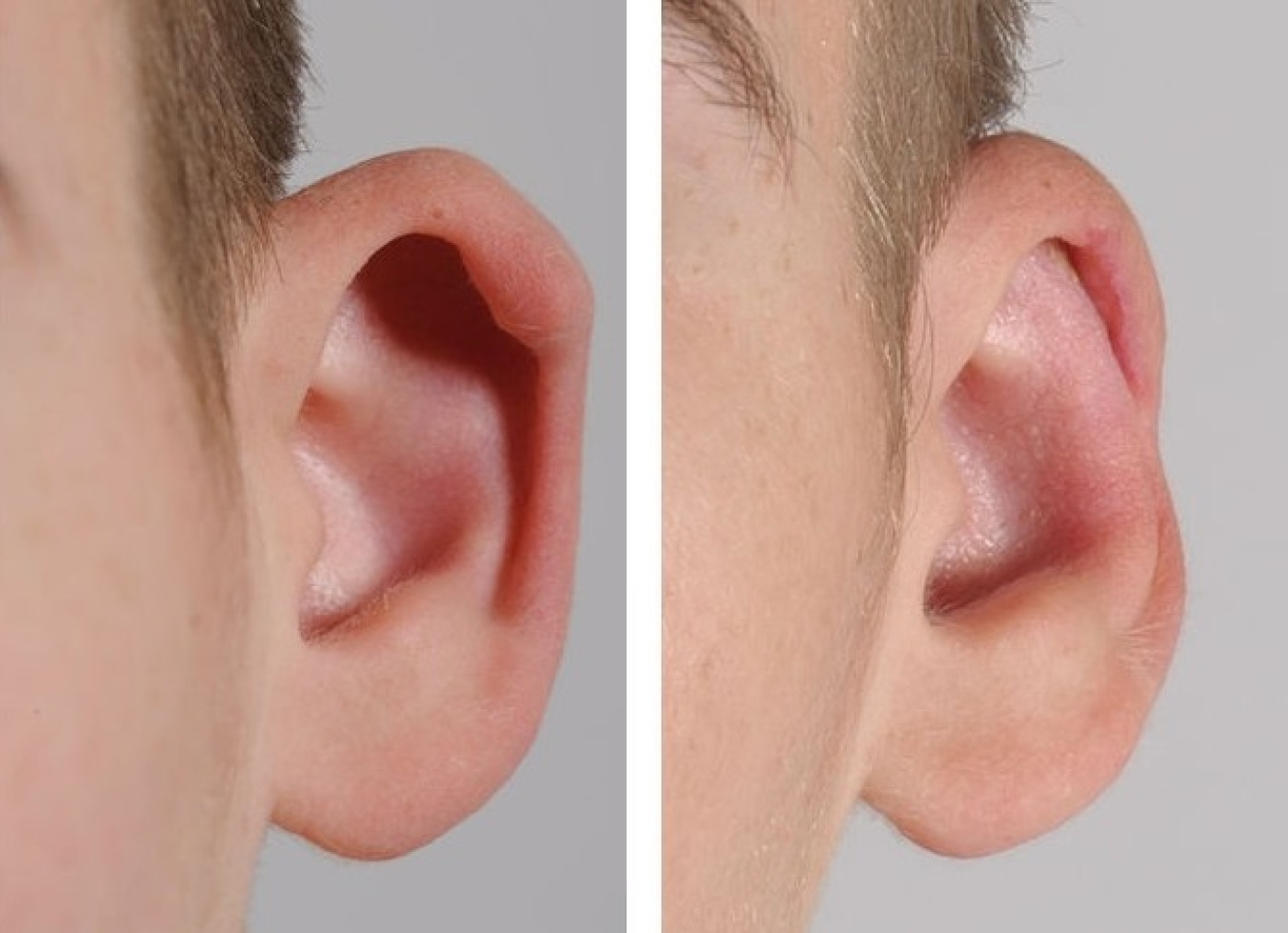
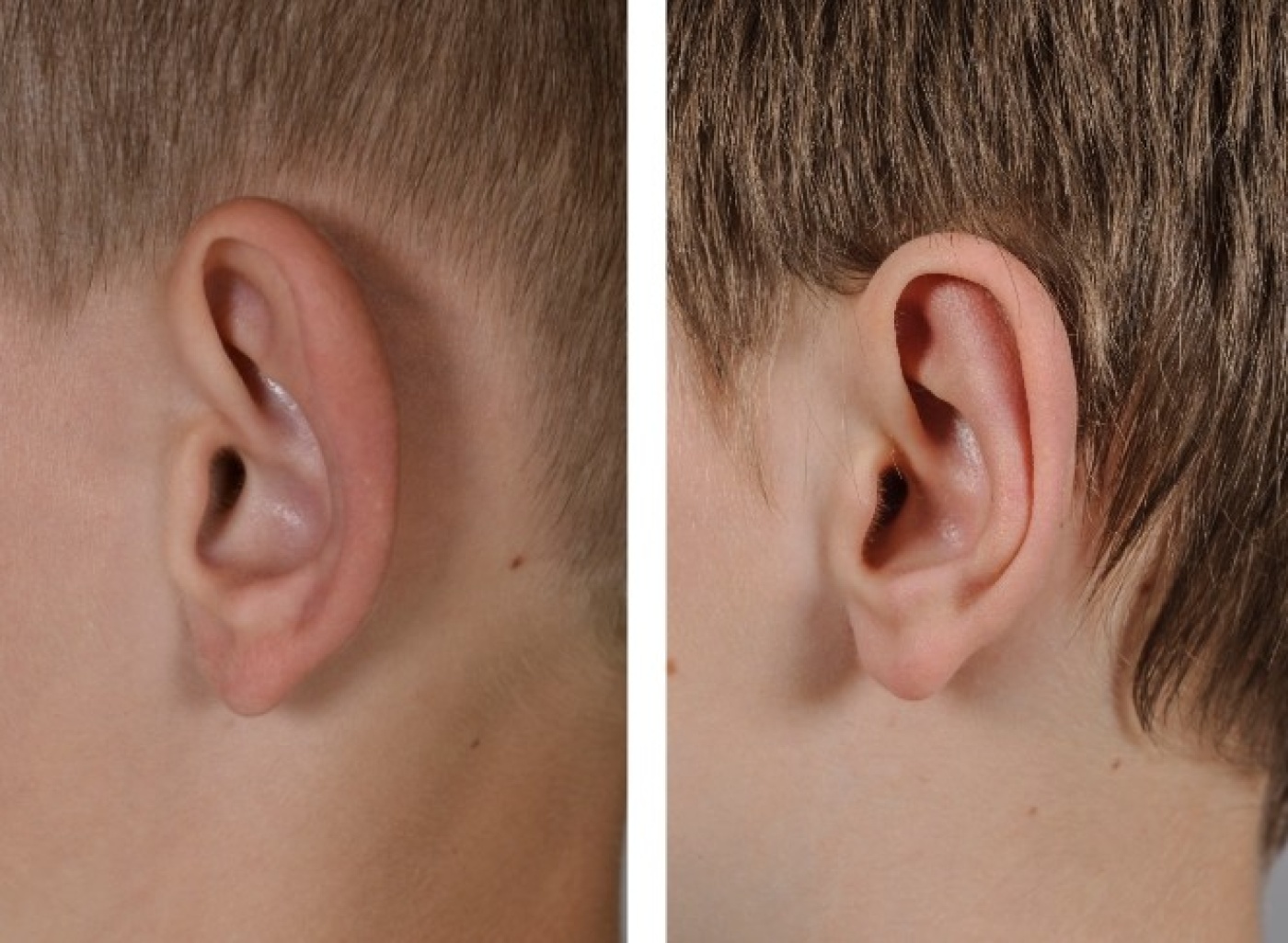
The skin fold (left) is virtually absent before the operation and can be seen clearly after the operation (right).